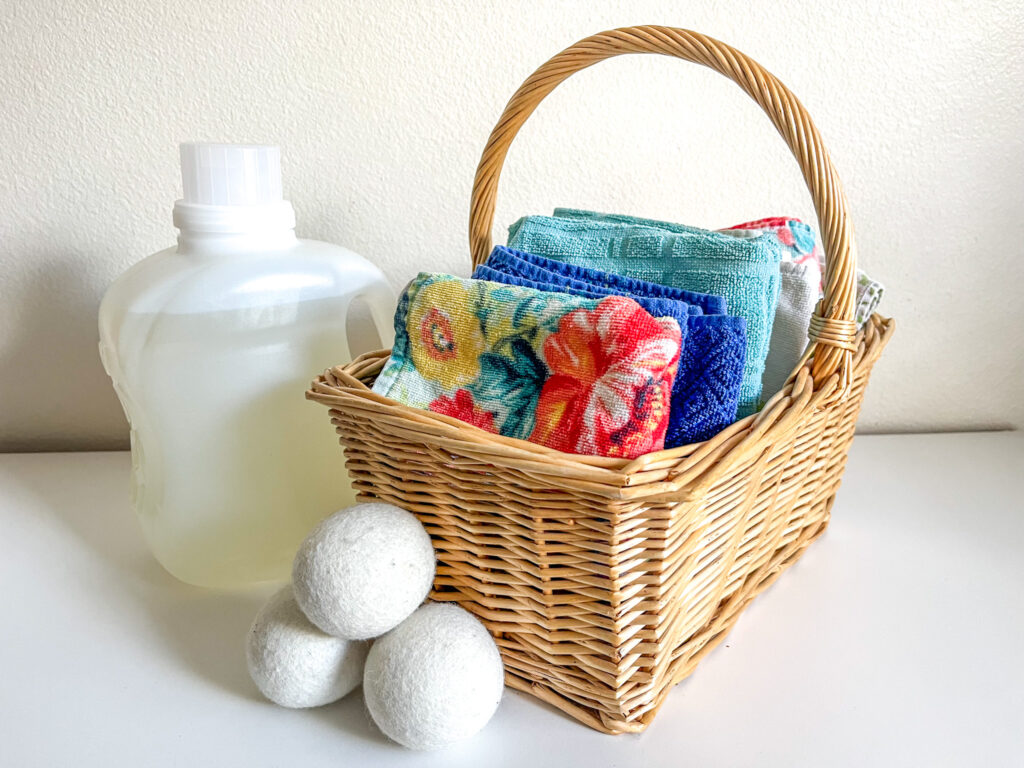
As a baby, my daughter developed eczema. I switched to fragrance-free laundry detergent shortly after she was born because scented ones made her break out worse. Thankfully, her eczema rashes have gone away. However, the few times I have used scented laundry detergent on her clothes while staying at my sister’s house, she has broken out with a rash. Recently, I learned about other harmful chemicals in laundry detergent and decided to switch what I was using. Most mainstream fragrance-free brands still contain some of these chemicals.
Hazardous Chemicals in Laundry Detergent
- Sodium Laurel Sulfate – a known skin irritant. In a study done on mice, it was found to disrupt the skin barrier for up to a week.
- Formaldehyde – a chemical used in embalming. In this study, it was found to cause nasal cancer in rats. The International Agency for Research on Cancer has listed formaldehyde as a carcinogen to humans.
- Phthalates – known to interfere with hormonal pathways. Human studies have found a link between phthalates and insulin resistance, type 2 diabetes, obesity, allergies, and asthma.
- Nonylphenol (NPE) – an endocrine disruptor. Not only does nonylphenol mimic estrogen in the body, but it also reduces the function of androgens.
- Fragrance – Synthetic fragrances cover the chemical smell of products. These are known to cause headaches, allergic reactions, and difficulty breathing in some people. They can also disrupt hormones.
Homemade Laundry Detergent – Powder and Liquid
Powder Laundry Detergent
After my daughter developed eczema, I researched making my laundry detergent. I decided to make a powder version using borax, washing soda, and grated laundry soap. I found that the powdered version did not dissolve well for me because I mainly use cold water for my laundry. Also, my sister clogged the drain pipe in her laundry room with homemade powder detergent. The plumber had to cut a section of the pipe out because the powder laundry detergent had cemented itself inside the pipe.
Liquid Laundry Detergent
Last year, I tried making and using liquid laundry detergent using borax, washing soda, grated laundry soap, and hot water. After using it for a few months, my laundry started to smell bad. Since I have used fragrance-free laundry detergent for years, my laundry usually does not smell at all. Because the homemade laundry detergent made my laundry have an unpleasant odor, it did not clean my clothes effectively.
Natural Laundry Detergents
After my homemade liquid detergent experiment, I decided to shop around for low-tox laundry detergents. There are so many great options in stores and online. Here are a few well-known brands that scored well on the Environmental Working Group website. Many can be found on Amazon.
- ATTITUDE Nature + Laundry Detergent, Unscented
- Blueland Laundry Detergent Tablets, Fragrance Free
- Biokleen. Natural Cold Water Laundry Detergent, Citrus Essence
- Molly’s Suds Laundry Powder
- Puracy Natural Laundry Detergent, Free & Clear
- Ecos Hypoallergenic Laundry Detergent with Enzymes, Lavender
Right now, I am using the Ecos Hypoallergenic Laundry Detergent Liquid, Free & Clear because my local Walmart carries it. Another plus is that the price is comparable to the mainstream fragrance-free detergent I had used in the past.
Hazardous Chemicals in Dryer Sheets and Fabric Softener
I haven’t used dryer sheets and fabric softener in years because they contain so many chemicals. Also dryer sheets can cause a waxy coating on your dryer and pose a fire hazard. Dryer sheets and fabric softener contain scary ingredients. Three of the worst chemicals are the following:
- VOCs – acetaldehyde and benzene. These toxic chemicals are listed as carcinogenic by the EPA. They are released into the air when you dry your laundry. There is no safe exposure level for these chemicals.
- Quaternary ammonium compounds (QACs) – chemicals used in preservatives, surfactants, and disinfecting products. With repeated exposure, QACs can aggravate the skin and respiratory system and possibly cause asthma.
- Fragrance – Synthetic fragrances irritate the respiratory system and disrupt hormones.
Natural Alternatives to Dryer Sheets and Fabric Softener
Here are a few ideas on how to minimize wrinkles and soften your clothes without dryer sheets or fabric softener:
- Baking soda – Sprinkle ½ cup of baking soda (less for smaller loads) on top of your clothes in your washing machine before adding your laundry detergent. This will not only soften your clothes, it will also take out bad smells. I like to add this to my towel load and my husband’s work clothes. It would also be a good idea to add this to workout clothes.
- Vinegar – For years, I have used white vinegar in place of fabric softener. You can simply place ½ cup in the fabric softener dispenser whenever you wash a load of laundry.
- Wool dryer balls – I am not sure why I took so long to try wool dryer balls, but they work great! Adding these to a load in the dryer really cuts the drying time and helps to minimize wrinkles. I bought Otylzto Wool Dryer Balls on Amazon recently and am really impressed with how well they work. You can also put a few drops of your favorite essential oil on a wool dryer ball before adding it to the dryer to make your laundry smell nice.
Make the Switch to Natural Laundry Detergent
I understand we can’t avoid every chemical out there. But if you can switch out a few items that will help your family’s overall health, why not do it? I highly recommend shopping around, finding a low-tox alternative to mainstream laundry detergent that you like, and using it. Many low-tox options are comparable in price to mainstream options. Also, give vinegar, baking soda, and wool dryer balls a try. They will help minimize wrinkles and soften your clothes without all the unnecessary chemicals.


[…] This is post two of the Natural Cleaning Series. Here’s post one about Natural Laundry Detergent. […]