Last Updated on October 7, 2026 by Kimberly

This post contains Amazon links. As an Amazon Associate, I earn from qualifying purchases.
I’ve known about fresh milled flour for most of my life since my mom used it in the 90’s. When I got married, I purchased a Nutrimill Classic Mill. (which is still going strong!) I’ve used fresh milled flour off and on for the past seventeen years. However, in the past five years, I have gone back to exclusively using fresh milled flour for my family’s baked goods.
History of Ancient Wheat
Wheat has been grown by humans for thousands of years. The ancient Sumerians that lived in Mesopotamia grew wheat and other crops. Also, archaeological evidence has been found of the Egyptians milling wheat, baking bread in ovens, and developing a food production system. The wheat used in ancient times was emmer and einkorn.
History of Modern Wheat
Modern wheat has been hybridized to make it easier to harvest. Emmer and einkorn are hulled grains that are difficult to thresh. Modern wheat is free threshing. The naked grain inside the wheat berry is released during the threshing process.
As a result of hybridization, modern wheat’s gluten composition is different from that of ancient wheat such as einkorn. For this reason, some people sensitive to gluten can tolerate einkorn flour just fine. You can purchase einkorn berries and flour online.
Nutrients in Fresh Milled Wheat Flour
B Vitamins
Wheat is a very nutritious food. It contains the following vitamins: thiamin (B1), riboflavin (B2), niacin (B3), pantothenic acid (B4), biotin (B7), folate (B9), and vitamin E.
B vitamins assist our metabolism by breaking down our food to create energy. They also keep our brain cells, skin cells, and other tissues in the body healthy.
Vitamin E is an important antioxidant. It helps the body fight against cancer, oxidative stress, cataracts, atherosclerosis, and Alzheimer’s disease.
Minerals
Wheat is high in the following minerals:
- Copper – helps your cells create energy and protects you from free radicals.
- Magnesium – helps your body use protein, helps your nerves and muscles to work properly, controls your blood glucose, and regulates blood pressure.
- Zinc – helps with enzyme function, boosts the immune system, speeds healing, and promotes cell health.
- Phosphorus – is a part of our teeth, bones, DNA, and RNA. It is crucial to our cell membrane’s structure and in creating our body’s energy source, ATP.
- Iron – is needed to make red blood cells that move oxygen from the lungs to body tissue.
Protein
Wheat contains the following proteins:
- Gluten and gliadin– help bread dough maintain elasticity and the ability to rise. Those with celiac disease must avoid these proteins because their immune system attacks them. For those who can tolerate it, gluten feeds the good bacteria in your body.
- Albumin– helps plasma to stay in your blood vessels and carries hormones, vitamins, and enzymes throughout the body.
- Globulin – helps your liver and kidneys work properly and your blood to clot.
Fiber
Eating enough fiber is important because it keeps the digestive system functioning as it should. Fiber is also a huge factor in our energy levels and heart health because it cleans out the arteries. Another benefit of fiber is feeding the good bacteria in our gut. When we have a healthy gut, it helps our central nervous system operate properly.
Different Types of Flour
Refined Flour
Wheat berries are made of three parts: bran, germ, and endosperm. In refined flour, the bran and germ are removed so the flour stays fresh for a long time. As a result, all-purpose flour is low in nutrients because most nutrients are stored in the bran and germ. Major minerals can be lowered up to 72% and trace minerals up to 64%. Many refined flour are bleached to give them their white color.
Whole Wheat Flour
Wheat flour from the store has more nutrients. However, once a wheat berry is ground into flour, the fatty acids inside oxidize. It is recommended to store whole wheat flour for only two weeks. Also, when the B vitamins in wheat are exposed to light and air through the milling process, they break down.
Many whole wheat flours and products contain preservatives, so they do not go rancid due to oxidation.
Fresh Milled Flour
Milling wheat berries at home is the best choice. This way you can be sure you are getting the most nutrients. I highly recommend buying organic wheat berries that do not contain glyphosate.
Wheat berries store for years. To mill wheat berries, you are going to need an electric grain mill. When I mill wheat berries for a recipe, I store the leftover flour in the freezer. This way I can pull it out and use it the next time I want to bake.
How to Use Fresh Milled Flour
Grinding the Berries
I buy organic hard white wheat berries in bulk and store them in 5-gallon food-grade buckets. When I want to make bread, I simply mill a large bowl of hard white wheat berries and use the flour. Hard white wheat berries are better for yeast recipes, like bread and rolls. Soft white wheat berries are better for quick breads, cakes, cookies, and pie crusts.
Recently, I have started using einkorn and khorasan berries since they are easier to digest for the people in my family who are gluten sensitive.
Baking Bread
Bread made completely with fresh milled flour tastes different than regular store-bought bread. It is a learning curve using fresh milled flour. Once you get the hang of it, making bread is an enjoyable process that requires very little hands-on time. Plus, the smell of freshly baked homemade bread is heavenly!
Fresh Milled Flour Recipes
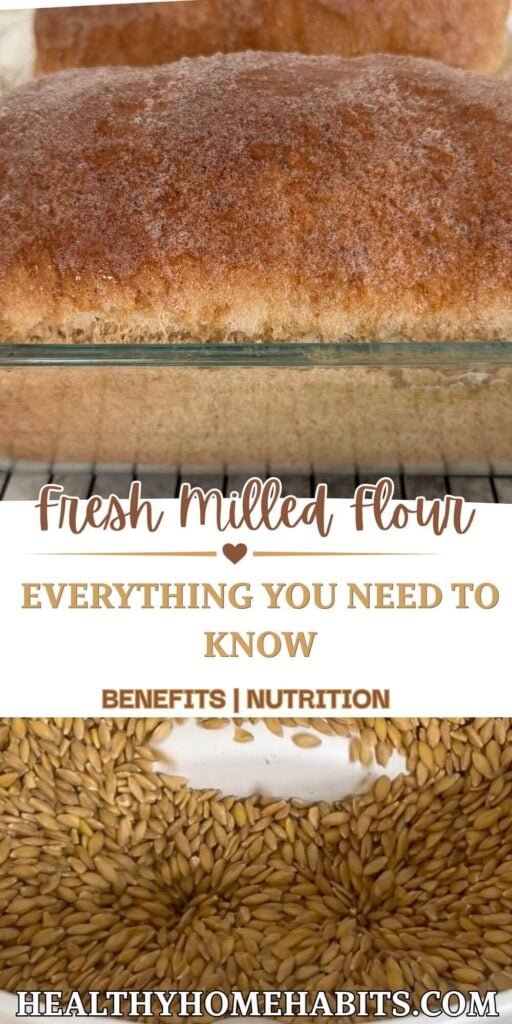
Fresh Milled Flour Bread – This is fresh milled flour bread the way it was meant to be made. Whole grain, nutrient-dense, and rich with natural flavor that only freshly milled flour can deliver.
Einkorn Flour Sour Cream Chocolate Chip Muffins – These muffins are so tasty! I make this recipe when I have sour cream I need to use up in the fridge.
Healthy Zucchini Muffins with Fresh Milled Flour – A great way to use all your garden-fresh zucchini! This recipe calls for soft white wheat flour.
Banana Bread Muffins with Chocolate Chips – A family classic! This recipes calls for soft white wheat flour and plenty of chocolate chips.
Einkorn Flour Blueberry Muffins – A must for blueberry lovers! This recipe also uses fresh milled einkorn flour.
I created a free PDF called “How to Start Milling Your Own Flour”. Please subscribe to the newsletter below to receive this free resource!


[…] milled soft white wheat flour – I highly recommend milling your own flour for all the health benefits. If you aren’t able to do that, you can substitute the same amount of all-purpose flour in this […]